Explore Properties and Uses of Materials

Engineers use a wide variety of materials to design and build technologies. The properties of each material determine its suitability. Engineers may investigate how the attributes, cost, and aesthetics of a material affect its performance and possible uses. 

Why is exploring properties and uses of materials important for youth?

Exploring the properties and uses of materials helps students develop a core engineering skill: choosing the right material for a purpose. Through hands-on investigation, students learn how materials behave when bent, stretched, or pressed, and notice qualities like strength, flexibility, texture, or water absorption. 

These simple tests build shared background knowledge, spark curiosity, and support evidence-based decisions during design. Over time, students begin to recognize patterns, predict performance, and explain their choices. This practice transforms making into meaningful engineering and helps learners connect science ideas to real-world problem-solving.

How does YES support exploring properties and uses of materials?

Students explore how materials behave and perform.

YES units link material properties to specific functions. For example, in Engineering Sun Hats, students test materials such as cloth, foil, and paper to determine how well they block sunlight.

Material investigations happen early in the unit.

YES units help students build knowledge before making design decisions. In Engineering Eco-friendly Slippers, students evaluate materials for durability, comfort, cost, and sustainability.

Design choices are based on material performance evidence.

YES units help students connect how materials perform to how they want their design to work. In all units, students are asked to draw and label their design and prompted to share why they chose each material. 

Video Resources

View these classroom videos of students students exploring properties and uses of materials in different YES units.

Play Video

Flour–Smooth, Soft, and Lumpy

Play Video

Soft or Hard

Video Reflection Questions

Students come to our classrooms with a variety of experiences, knowledge, and skills. By being intentional and explicit about making observations, the teacher creates an environment where everyone can access the information they need to successfully create a design.

Teachers can give students opportunities to make their thinking visible by asking targeted questions such as, “What property of this material makes it a good choice?” or “How does this material help solve the problem?” and by prompting students to reference their observations. Providing sentence starters like “I chose this material because…” or “This material works well because…” can help all students participate in explaining their reasoning. Creating structured opportunities for students to share and compare choices, such as partner talk or whole-group discussions, allows them to hear multiple approaches and refine their thinking.
Image
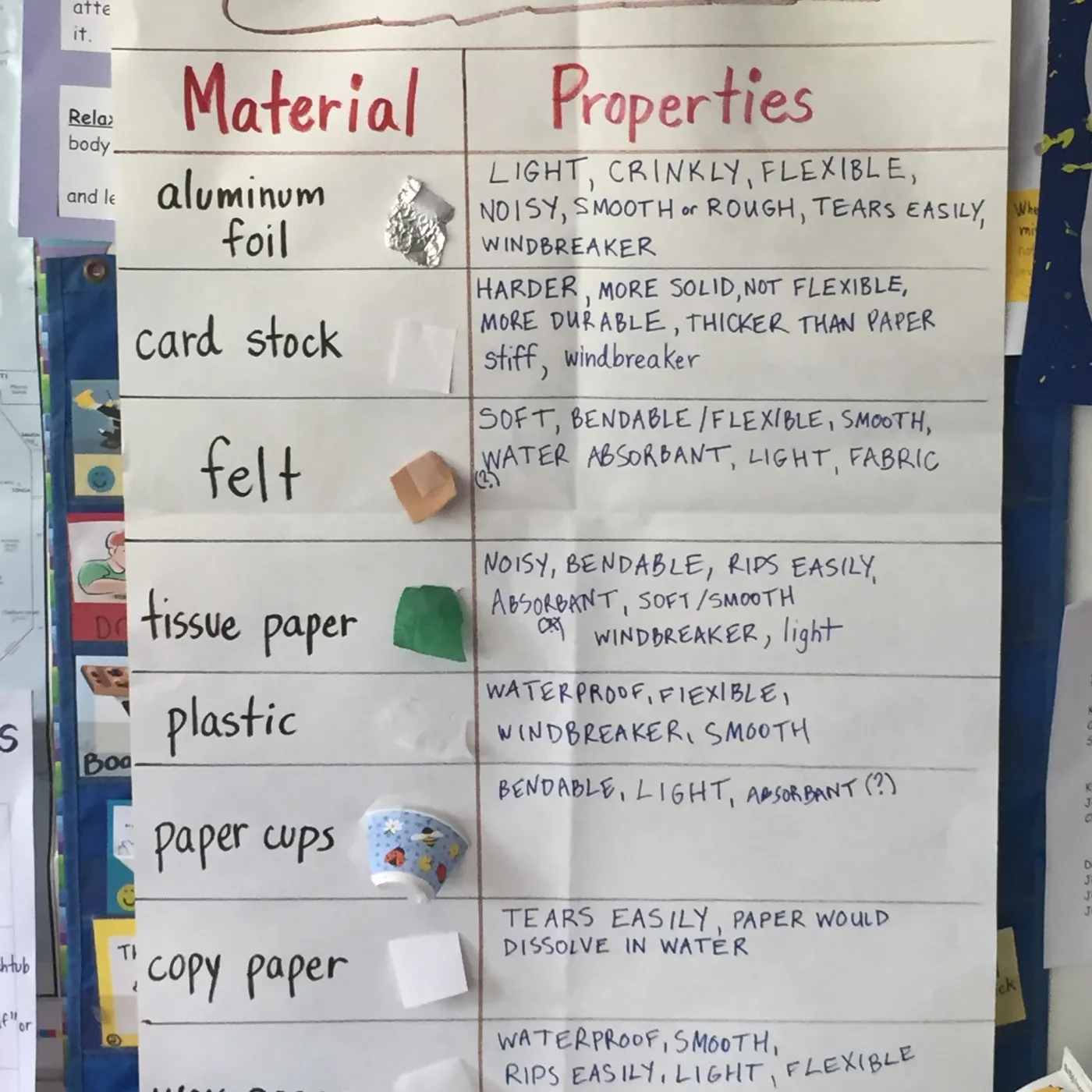
Materials and properties chart

What does exploring properties and uses of materials look like in your classroom?

  • Encourage predictions. Ask students to guess how a material will behave, then test their ideas.
  • Record and display material property investigations. Provide students with a visual reference of your material testing results while they are designing.
  • Use real-world connections. Highlight how engineers select materials for products they use daily, like clothing, packaging, or buildings​. 

“We needed to know the properties and the [testing] helped me out a lot...because then I figured out which [material] was stickier, which was stronger, and then it was easier to know which to use in the [design].” 

- 4th grade student 

Image
Icon with lightbuld and "Did You Know?"


Research shows that hands-on exploration of materials deepens learning. When students physically manipulate and test materials, they build stronger conceptual understanding and more durable knowledge than through reading or discussion alone. (Cunningham, 2018)

Want this engineering practice on hand?

Download the PDF to print or share this engineering practice!