Learning Library

The YES Learning Library provides educators with resources to refresh and improve their engineering education pedagogy. The library includes video from classrooms, student work artifacts, reflection questions, and more, to give educators a multimodal, online learning experience. Select one of the topics below to get started!

The YES Approach

Developing high-quality educational materials is an intentional process. Three decades of research and development by the YES team inform our model for engineering learning.

Explore the design principles for each of the four dimensions of our framework below.

Socially Engaged Engineering

Image
impact

Situate the Problem in a Societal Context

Students engage in real-world engineering challenges that expand their horizons while connecting to their lives, communities, and cultures. Activities begin with narratives that demonstrate how engineers shape our world by solving problems.

Image
impact on user

Consider the Impacts on Different Individuals, Groups, or Systems

Students consider who or what is most affected by the problem and how. They use this knowledge to make design decisions.

Image
Impact

Think Critically About the Impact of Engineered Solutions

Students identify consequences, positive and negative, of engineered solutions. They consider the potential impacts of the technologies they design.

Asset-Based Pedagogies

Image
prior experiences

Leverage Prior Knowledge and Experiences

Students explore family connections to the engineering problem that are relevant to their everyday lives. They draw upon their prior knowledge and leverage their personal experiences to design solutions.

Image
familiarity

Develop Familiarity With Materials, Tasks, and Terminology

Students of all ages and ability levels participate in scaffolding activities that develop necessary knowledge, skills, and tools. Previous familiarity with materials, tasks, or terminology is not assumed.

Image
writing

Create Multimodal, Flexible Activities

Students interpret content and express their understandings in a variety of ways. These span listening, speaking, demonstrating, writing, and drawing.

Engineering Identity

Image
bench

Use Low-Cost, Readily Available Materials

Students use inexpensive, common materials to build the technologies. Because these materials are affordable and available, learners can continue their engineering explorations at home.

Image
role model

Provide Role Models With Diverse Demographic Characteristics

Students learn from diverse role models in context-setting narratives, videos, and their community. Each unit introduces role models who reflect the diversity of individuals involved in engineering.

Image
identity

Nurture Engineering Identities and Mindset

Students develop interest, knowledge, abilities, and identities by engaging in authentic engineering practices from a young age. These early, successful experiences build students’ confidence in and affiliation with engineering and encourage a problem-solving mindset.

Engineering Design Process

Engineers use a structured, iterative process to solve problems. YES organizes students’ work with an age-appropriate, cyclical, engineering design process. Naming design phases helps students understand the goal of the activity.

This is not a rigid process. As students engineer, they move back and forth between phases. After proceeding through the basic phases, learners improve their design by repeating the cycle.

Explore the phases:

Recorded Webinars

Play Video

Getting to Know YES: An Introduction to the YES Engineering Approach

Play Video

Getting Started with YES Webinar

Play Video

I Can Show What I Know: Engineering With English Learners

Play Video

Using Engineering Practices to Increase Student Engagement

Play Video

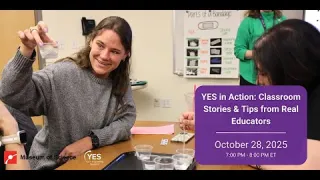
YES in Action: Classroom Stories & Tips from Real Educators

Play Video

Engineering for Every Learner: Strategies for Students with Support Needs